

The UAE is rapidly moving toward a fully digital tax ecosystem, and E-Invoicing in UAE is becoming one of the most important compliance requirements for businesses. With the Federal Tax Authority (FTA) introducing new digital invoicing frameworks, SMEs across the UAE must understand how e-invoicing works, its benefits, compliance requirements, and how to prepare before implementation becomes mandatory.
For small and medium-sized enterprises (SMEs), adapting early to UAE e-invoicing regulations can help avoid compliance risks, improve operational efficiency, and streamline VAT reporting. In this blog, we explain everything SMEs need to know about UAE E-Invoicing, including its meaning, benefits, implementation process, compliance requirements, and how businesses can prepare for the upcoming digital tax transformation.
What is E-Invoicing in UAE?
E-Invoicing in UAE refers to the electronic generation, exchange, validation, and storage of invoices in a structured digital format. Unlike traditional PDF or paper invoices, e-invoices are created electronically and transmitted through approved digital systems that comply with FTA regulations. The UAE government aims to modernize tax administration and improve transparency by implementing a standardized e-invoicing framework.
E-invoices typically contain:
- Seller and buyer details
- VAT registration numbers
- Invoice number and date
- Taxable amount and VAT amount
- Digital validation and authentication
The system helps businesses automate invoicing processes while ensuring accurate VAT reporting.
Why is UAE Introducing E-Invoicing?
The UAE government is implementing e-invoicing to support its digital economy strategy and strengthen tax compliance.
Key Objectives of UAE E-Invoicing
1. Improve VAT Compliance
E-invoicing reduces manual errors and helps businesses maintain accurate VAT records.
2. Prevent Tax Fraud
Digital validation improves invoice authenticity and minimizes fake invoicing practices.
3. Enhance Business Efficiency
Automated invoicing saves time and reduces administrative workload.
4. Support Digital Transformation
The initiative aligns with the UAE’s vision for a paperless and technology-driven economy.
5. Faster Tax Audits
Digital records simplify tax audits and regulatory reviews.
Benefits of E-Invoicing for SMEs in UAE
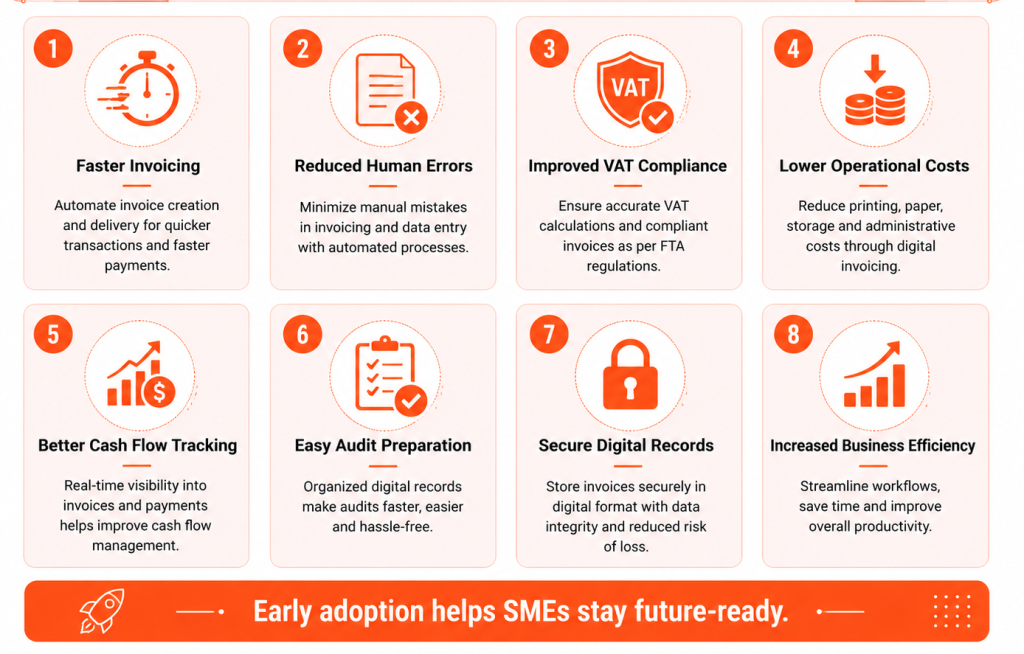
Who Will Be Affected by E-Invoicing in UAE?
The UAE e-invoicing framework is expected for applying to:
- SMEs
- Large corporations
- VAT-registered businesses
- Retail businesses
- Service providers
- E-commerce companies
Businesses operating in the UAE should start preparing early, especially those already registered for VAT.
How Does E-Invoicing Work in UAE?
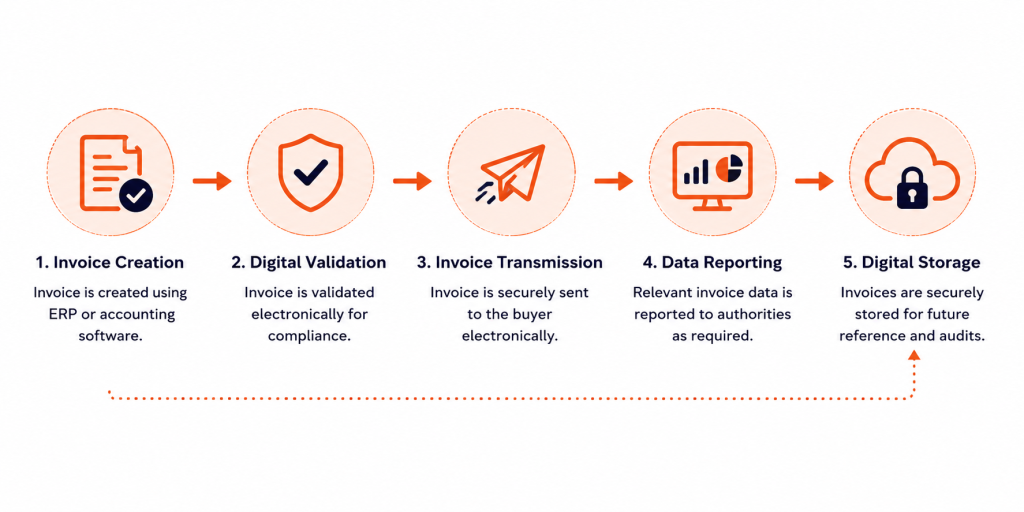
Common Challenges SMEs May Face
Software Integration Issues
Older accounting systems may not support structured e-invoicing formats.
Employee Training Requirements
Teams may need training on digital invoicing procedures.
Compliance Confusion
Many SMEs may struggle to understand evolving FTA regulations.
Data Security Concerns
Businesses must ensure secure invoice storage and data protection.
Why Early Preparation Matters
Although full implementation timelines may vary, businesses that prepare early will gain significant advantages, including:
- Reduced compliance risks
- Smoother transition process
- Better operational efficiency
- Improved financial accuracy
- Competitive advantage in digital readiness
Early adoption also helps SMEs avoid last-minute system upgrades and compliance disruptions.
How RVG Can Help Your Business
At RVG Chartered Accountants, we help businesses prepare for UAE’s evolving tax and compliance landscape.
Our services include:
- E-invoicing readiness assessment
- VAT compliance support
- Accounting software advisory
- ERP implementation guidance
- Tax compliance consulting
- SME financial advisory services
Our experts help businesses implement practical and compliant e-invoicing solutions tailored to UAE regulations.
Conclusion
E-Invoicing in UAE is set to reshape how businesses manage invoicing, VAT reporting, and compliance. SMEs that prepare early can benefit from improved efficiency, reduced compliance risks, and smoother digital transformation. As the UAE continues advancing toward a technology-driven tax system, businesses should proactively upgrade their invoicing processes and ensure compliance with readiness. Partnering with experienced tax and accounting professionals can help SMEs navigate UAE e-invoicing regulations confidently and efficiently.


