

Stay compliant with the UAE Corporate Tax Law by registering your business accurately and on time. At RVG Chartered Accountants, we provide reliable Corporate Tax Registration Services in Dubai to help businesses complete their registration through the Federal Tax Authority (FTA) with ease. From assessing your eligibility to obtaining your Corporate Tax Registration Certificate, our tax professionals manage the entire process while ensuring full compliance with UAE regulations.
✓ FTA-Compliant Registration
✓ Dedicated Corporate Tax Consultants
✓ Fast & Accurate Documentation
✓ End-to-End Registration Support
✓ Assistance for Mainland & Free Zone Businesses

What is UAE Corporate Tax Registration?
UAE Corporate Tax Registration is the process of registering a taxable person with the Federal Tax Authority (FTA) through the EmaraTax portal to comply with the UAE Corporate Tax Law. Once your registration is approved, the FTA issues a Corporate Tax Registration Number (TRN) and a Corporate Tax Registration Certificate, confirming that your business is officially registered for Corporate Tax. Registration is the first step in meeting your corporate tax obligations in the UAE. It enables businesses to fulfill future compliance requirements, including maintaining proper accounting records, filing Corporate Tax returns, and paying tax (where applicable) within the prescribed deadlines. It’s important to understand that registering for Corporate Tax does not automatically mean your business will pay Corporate Tax immediately. Registration is a legal compliance requirement, while the actual tax liability depends on factors such as your taxable income, business activities, exemptions, and applicable reliefs under the UAE Corporate Tax Law. At RVG Chartered Accountants, our Corporate Tax Registration Services in Dubai help businesses complete this process accurately and efficiently, reducing the risk of errors that could delay approval or lead to future compliance issues.
Why is Corporate Tax Registration Important?
Completing your FTA Corporate Tax Registration UAE is more than obtaining a registration certificate, it’s about establishing your business as a compliant taxable person under UAE law.
Timely registration helps businesses:
- Comply with Federal Tax Authority (FTA) requirements
- Avoid administrative penalties for late registration
- Receive a Corporate Tax Registration Number
- Prepare for future Corporate Tax return filing
- Build a strong compliance framework for business growth
- Demonstrate good corporate governance to stakeholders and financial institutions
Delaying registration until the last minute may result in unnecessary stress, incomplete applications, or avoidable penalties. Registering early allows sufficient time to gather documentation, verify information, and address any queries raised by the FTA.
Step-by-Step Corporate Tax Registration Process
Understanding the process helps businesses avoid confusion and delays. Below is the structured workflow followed by RVG:
Step 1: Business Assessment
We begin by reviewing your company structure, activities, and financial profile to determine whether registration is mandatory or optional under UAE Corporate Tax Law.
Step 2: Document Collection
You provide the required business documents. Our team verifies them for accuracy and compliance before submission.
Step 3: EmaraTax Account Setup
We create or access your FTA EmaraTax profile, ensuring all entity details are correctly configured in the system.
Step 4: Application Preparation
Our consultants carefully prepare your Corporate Tax registration application, ensuring:
- No missing data
- No classification errors
- Alignment with FTA requirements
Step 5: Submission to FTA
The application is submitted through the Federal Tax Authority system for official review.
Step 6: FTA Review Process
The FTA may:
- Approve the application directly, or
- Request additional clarification or documents
We handle all communication and follow-ups during this stage.
Step 7: Certificate Issuance
Once approved, the FTA issues your Corporate Tax Registration Certificate UAE, confirming your business is officially registered under the Corporate Tax system.
Who Must Register for UAE Corporate Tax?
One of the most common questions businesses ask is:
“Does my business need to register for Corporate Tax?”
The answer depends on your legal structure, residency status, business activities, and whether you fall within the scope of the UAE Corporate Tax Law. In general, many businesses operating in the UAE are required to Register for Corporate Tax UAE, even if they expect little or no Corporate Tax to be payable.
Businesses and persons that may need to register include:
Mainland Companies
Companies incorporated in the UAE mainland, including LLCs, civil companies, and other legal entities conducting business activities.
Free Zone Companies
Many Free Zone entities are required to register, including those that may qualify as a Qualifying Free Zone Person.
Branches of Foreign Companies
Foreign businesses operating through a branch in the UAE may have Corporate Tax registration obligations depending on their activities and tax status.
Holding Companies
Holding entities established to own shares or investments may also be required to register under the Corporate Tax regime, depending on their circumstances.
Startups and SMEs
Newly established businesses and small or medium-sized enterprises should assess whether they fall within the registration requirements.
Professional Firms
Consultancies, legal firms, engineering companies, marketing agencies, IT firms, healthcare providers, and other professional service businesses may also be required to register.
Corporate Tax Registration Deadline
Businesses required to register under the UAE Corporate Tax regime should complete their registration before the applicable Federal Tax Authority (FTA) deadline to avoid administrative penalties and unnecessary compliance risks. As the deadline approaches, the FTA portal may experience increased application volumes, leading to delays in processing. Registering early gives your business sufficient time to prepare the required documents, resolve any issues, and obtain your Corporate Tax Registration Certificate without unnecessary pressure. Early registration helps your business remain compliant, avoid delays, and prepare for future Corporate Tax filing obligations.
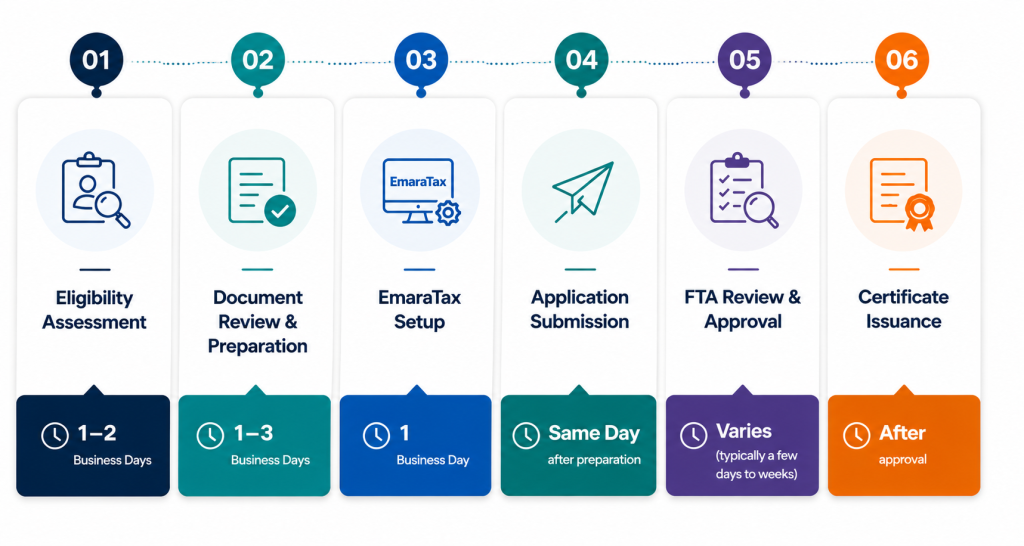
Corporate Tax Registration Timeline (What to Expect)
The timeline for UAE Corporate Tax Registration depends on the completeness of documentation and FTA review workload. However, a typical structured timeline looks like this:
Standard Timeline Overview
Documents Required for UAE Corporate Tax Registration
To successfully Register for Corporate Tax UAE, businesses must submit accurate and up-to-date documents through the EmaraTax portal. The FTA uses this information to verify your business identity, structure, and tax eligibility. While requirements may vary slightly depending on the entity type (mainland, Free Zone, branch, or individual), the most commonly required documents include:
- Trade License
- Passport Copies of Owners/Shareholders
- Emirates ID (if applicable)
- Memorandum of Association (MOA)
- Contact Information
- Financial Information (if requested)
- VAT Registration Number (if applicable)
- Authorization Documents
Common Mistakes in Corporate Tax Registration
Many businesses face delays or rejections not because they are ineligible, but because of avoidable mistakes during the registration process. Below are the most common issues:
Incorrect Business Activity Selection
Choosing the wrong activity during registration can lead to classification errors and FTA queries.
Mismatch in Shareholder Details
Differences between trade license, MOA, and passport information can trigger verification delays.
Incomplete Documentation
Missing Emirates IDs, outdated licenses, or incomplete MOAs often result in application hold.
Wrong Tax Period Selection
Selecting an incorrect financial year can impact future Corporate Tax filings.
ImproperEmaraTaxSetup
Incorrect setup of the FTA portal profile is a frequent cause of rejection or delays.
Delayed Registration
Waiting until the last moment especially close to the September 30, 2026 deadline can lead to system overload and processing delays.
Ignoring FTA Queries
Failing to respond promptly to FTA requests can result in application rejection.
These mistakes are preventable with proper guidance from a Corporate Tax Registration Consultant in Dubai.
What Happens If You Delay Corporate Tax Registration?
Failing to register for UAE Corporate Tax within the required timeframe can have serious consequences for your business. The FTA expects all taxable persons to comply with registration requirements proactively.
1. Administrative Penalties
Late registration may result in financial penalties imposed by the Federal Tax Authority. These penalties are enforced to ensure compliance and discourage delays in registration.

2. Compliance Risk Flagging
Businesses that fail to register on time may be flagged for compliance review, increasing scrutiny on:
- Financial records
- Business activities
- Tax reporting obligations

3. Delays in Future Tax Filings
Without timely registration, businesses cannot proceed with:
- Corporate Tax return filing
- Tax assessments
- Compliance submissions
This can create operational disruptions later.

4. Increased Risk of Application Rejection
Late submissions often contain rushed or incomplete information, leading to:
- Missing documents
- Incorrect classifications
- EmaraTax submission errors
- FTA clarification delays

5. Operational and Banking Challenges
A missing or delayed Corporate Tax Registration Certificate UAE may impact:
- Bank compliance checks
- Audit requirements
- Business licensing renewals
- Investor or stakeholder reporting

What Happens After Corporate Tax Registration?
Once your business is registered under the UAE Corporate Tax Law, you are officially recognized as a taxable person (where applicable) by the FTA. From this point onward, your business must maintain proper financial discipline and comply with ongoing regulatory requirements. Key post-registration responsibilities include:
- Maintaining accurate accounting records
- Preparing financial statements
- Tracking taxable income
- Managing deductible expenses
- Filing Corporate Tax returns annually
- Retaining financial documentation
- Updating FTA records when business changes occur
Registration is not the end—it is the start of structured tax compliance.
Why Businesses Choose RVG for Corporate Tax Registration
Choosing the right Corporate Tax Registration Consultant in Dubai can make a significant difference in ensuring a smooth registration experience. At RVG, we combine technical expertise with practical business understanding to help clients navigate the registration process efficiently.
What You Can Expect
✅ Professional assessment of your Corporate Tax registration requirements
✅ Assistance with document collection and verification
✅ Accurate registration through the FTA EmaraTax portal
✅ Guidance from experienced Corporate Tax professionals
✅ Regular updates on your application status
✅ Ongoing support after registration
✅ Advice on future Corporate Tax compliance requirements
Our objective is not only to help you obtain your Corporate Tax Registration Certificate UAE, but also to establish a strong compliance foundation that supports your business in the years ahead.


