

Many businesses in the UAE focus heavily on VAT registration, but very few prepare for what happens when it is time for VAT de-registration. At first, VAT registration may seem simple and affordable. Businesses often rely on freelancers or low-cost bookkeeping support to handle VAT filing and compliance. However, when revenue drops, a business closes, or restructuring begins, companies suddenly realize that VAT de-registration in the UAE is far more complicated than expected.
Without proper accounting records and FTA-compliant documentation, businesses can face delays, penalties, blocked applications, and costly corrective work. In this blog, we explain the hidden risks behind VAT de-registration and how professional accounting support can help businesses stay compliant and avoid financial losses.
What Is VAT De-Registration in UAE?
VAT de-registration is the process of cancelling a company’s VAT registration with the UAE Federal Tax Authority (FTA).
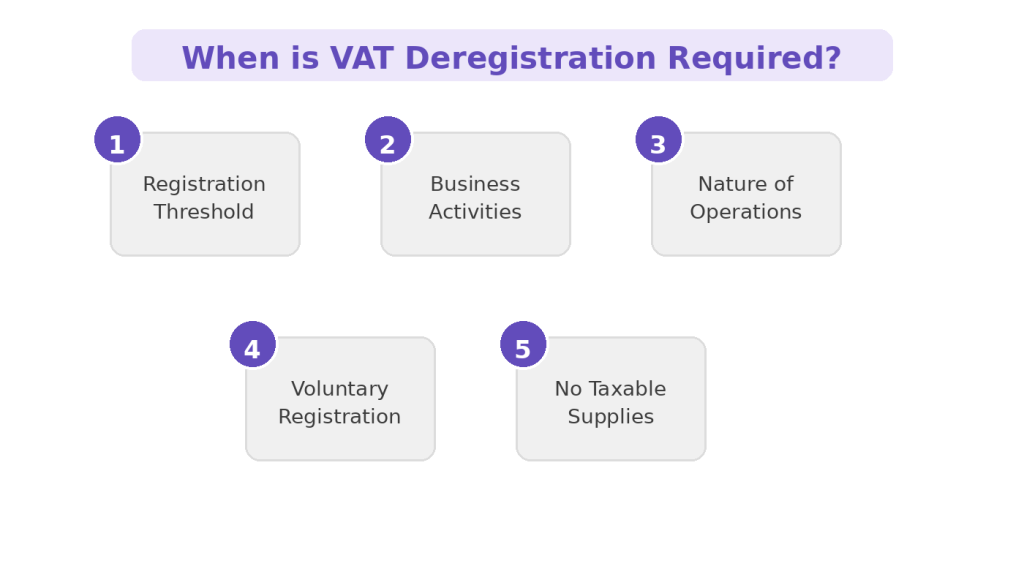
A business may need to apply for VAT de-registration when:
- Annual taxable revenue falls below the mandatory VAT threshold
- The business stops operations
- The company undergoes restructuring or liquidation
- Taxable supplies are no longer made
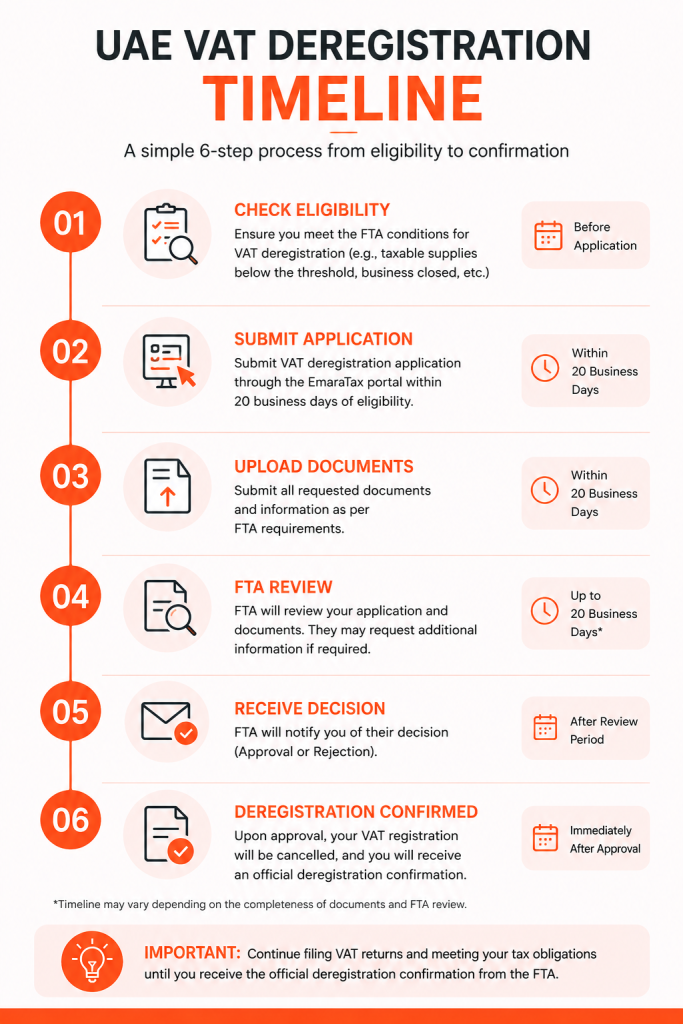
Under UAE VAT regulations, eligible businesses must apply for VAT de-registration within the required timeframe to avoid penalties.
The Biggest VAT De-Registration Mistake Businesses Make
Many companies assume that if VAT registration is easy, de-registration will be equally simple. Unfortunately, that is not the case.
The real issue begins when the FTA requests:
- Financial statements
- VAT return history
- Sales invoices
- Purchase records
- Customs documents
- Bank statements
- Supporting accounting schedules
- Records in FTA-prescribed formats
Businesses that rely on incomplete bookkeeping or irregular VAT filing often struggle to provide these documents correctly.
As a result:
- Applications get stuck in review
- Compliance notices are issued
- Penalties start accumulating
- Outstanding liabilities delay approval
- Businesses spend significantly more on cleanup and correction work
Common Reasons for VAT De-Registration in UAE
- Revenue Falls Below the Threshold
If taxable revenue falls below the mandatory threshold, businesses may become eligible or required to deregister VAT.
- Business Closure
Companies shutting down operations must complete VAT de-registration before final closure procedures are completed.
- Business Restructuring
Mergers, acquisitions, or internal restructuring may require VAT registration updates or cancellations.
- Change in Business Activity
If a company no longer makes taxable supplies, VAT deregistration may become necessary.
Risks of Improper VAT De-Registration
Ignoring proper VAT de-registration procedures can create serious compliance issues.
Penalties and Fines
Failure to apply within the required period may result in administrative penalties imposed by the FTA.
Delayed Approval
Applications may remain under review for extended periods if supporting documents are incomplete.
Outstanding VAT Liabilities
Any unpaid VAT obligations can block the de-registration process.
Expensive Corrective Accounting
Businesses often end up paying significantly higher costs to reconstruct missing records and correct historical accounting issues.
Why Proper Accounting Records Matter
One of the most overlooked aspects of UAE VAT compliance is maintaining records in the correct format.
Professional accounting support helps businesses:
- Maintain organized bookkeeping
- Ensure VAT filings are accurate
- Prepare audit-ready financial records
- Track liabilities correctly
- Respond quickly to FTA requests
- Complete VAT de-registration smoothly
Businesses that maintain proper accounting systems from the beginning face fewer complications during de-registration or tax audits.
How RVG Helps Businesses Avoid VAT Compliance Problems
RVG provides comprehensive accounting, VAT, audit, and compliance solutions for businesses across the UAE.
Our team helps businesses:
- Maintain accurate accounting records
- Ensure VAT compliance
- Handle VAT registration and de-registration
- Prepare FTA-required documentation
- Resolve backlog accounting issues
- Avoid unnecessary penalties and delays
With professional guidance, businesses can reduce compliance risks and focus on sustainable growth.
Conclusion
VAT de-registration in the UAE is not just a simple cancellation process. It requires proper documentation, accurate accounting records, and timely compliance with FTA regulations. Businesses that ignore recordkeeping and compliance requirements often face delays, penalties, and costly corrective work later. Investing in professional accounting and VAT support today can help businesses avoid significant financial and operational problems in the future. If your business is planning VAT de-registration, facing backlog accounting issues, or struggling with VAT compliance, professional guidance can make the entire process faster, smoother, and stress-free.


